PENCILL LTD — Systems & Software EngineeringDoc. PCL-01 / 2026
Precision-engineered software, drawn to specification.
PENCILL LTD designs, builds and maintains production-grade systems for teams that treat engineering as a discipline — measured, documented and delivered to a steady standard.

Introduction
PENCILL LTD approaches every engagement the way an engineer reads a drawing: establish the constraints, plot the working envelope, then build within it. The result is software that behaves the way it was specified — clear, testable and stable across its whole life.
We work as a single accountable engineering practice rather than a pool of interchangeable resources. Decisions are written down, trade-offs are made explicit, and the people who design a system remain close to it while it runs.
- Method
- Measured
- Interface
- Documented
- Delivery
- Reproducible
- Support
- Continuous
Core IT capabilities
The working disciplines that run through every project, from first sketch to long-term care.
Application engineering
Custom software and web applications built to a written specification, with the seams left clean for future work.
Infrastructure & cloud
Cloud platforms and delivery pipelines designed for predictability, so environments stay consistent from development to production.
Data & integration
APIs, data pipelines and system integrations that move information reliably between the tools a business already runs.
Security posture
Security considered as a property of the design, applied from the first architecture decision rather than bolted on at the end.
Verification & assurance
Automated and manual testing arranged around risk, so the evidence that a system works is produced continuously.
Business challenges we address
01
Systems that resist change
Software that has grown without a plan becomes expensive to alter. We isolate the parts that hold value and rebuild the structure around them.
02
Work that cannot be verified
When nothing is written down, quality becomes a matter of opinion. We introduce specifications and tests that make correctness observable.
03
Data trapped in silos
Information that cannot move between tools slows every process it touches. Integration work restores a single, dependable flow.
04
Fragile release processes
Manual deployment invites error. Automated, repeatable delivery removes guesswork from the moment code reaches production.
05
Unclear ownership after launch
Projects delivered without documentation stall. We hand over systems that another team can genuinely operate.
06
Security added too late
Retrofitted controls are costly and incomplete. Considering security during design keeps protection proportionate and practical.
Detailed services overview
Twelve service lines, delivered individually or as a combined programme of work. Each is scoped in writing before it begins.
- Custom software development
- Systems designed around a specific domain and its rules.
- Web application development
- Browser-delivered applications built for accessibility and speed.
- Cloud solutions & infrastructure
- Environments defined as code and provisioned repeatably.
- API & systems integration
- Contracts, adapters and data mapping between existing systems.
- Product design & UX engineering
- Interface design carried through to implemented components.
- Data engineering & analytics
- Ingestion, modelling and reporting pipelines with traceable lineage.
- Quality assurance & test automation
- Layered test suites arranged around the risks that matter.
- Cybersecurity-oriented engineering
- Threat modelling, hardening and secure delivery practice.
- Legacy system modernisation
- Incremental replacement that keeps the business running throughout.
- Technical consulting & architecture
- Written architecture, options analysis and second opinions.
- DevOps & continuous delivery
- Pipelines, observability and release practice that reduce risk.
- Software maintenance & support
- Corrective, adaptive and preventive care for running systems.
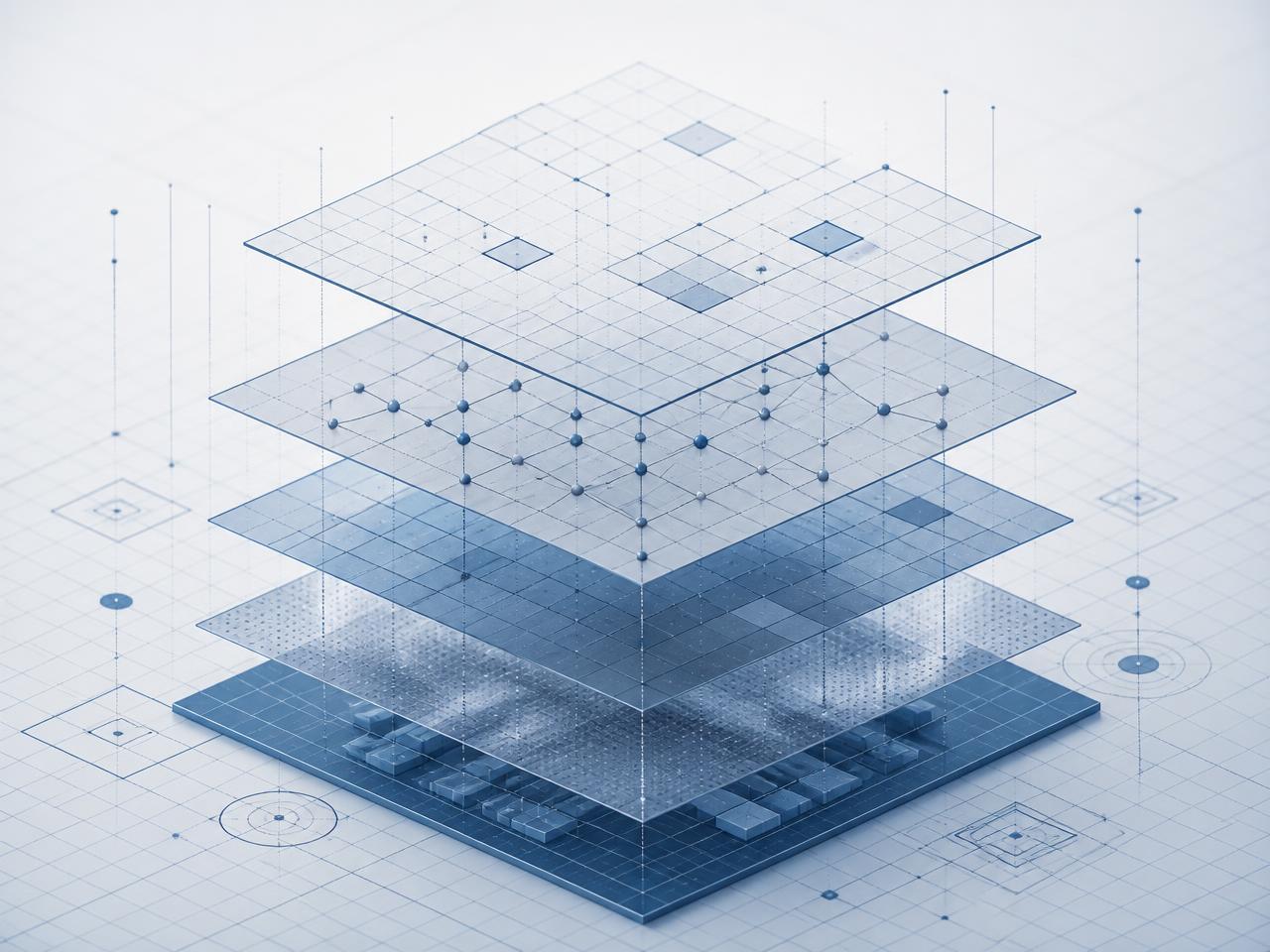
Technology and engineering approach
We choose technology for its fit and its longevity. A platform that is widely understood, well documented and easy to hire for is usually the right answer, and we say so plainly when a simpler option would serve better.
Written architecture
Structure, data flow and interfaces drawn before implementation.
Small increments
Reviewed changes, each one traceable to a requirement.
Automated verification
Tests and checks that run on every change, not on request.
Observability by default
Logging, metrics and tracing designed in, not appended.
Industries we are equipped to serve
Our engineering practice adapts to the regulatory and operational context of each sector rather than imposing a fixed template on it.
- 01Professional and business services
- 02Logistics and supply chain
- 03Manufacturing and industrial operations
- 04Financial and accounting operations
- 05Healthcare and life-science support systems
- 06Education and training providers
- 07Retail and e-commerce operations
- 08Public-sector and non-profit organisations
The approach is the output.
We write down what we intend to build, agree the acceptance criteria up front, and hold the line between the drawing and the running system. If a detail is not specified, we flag it rather than guess.
Step 01
Discovery & specification
We map the problem, the edge cases and the acceptance criteria before any code is written.
Step 02
Architecture & design
The system is drawn first — structure, data flow and interfaces — so nothing is improvised under pressure.
Step 03
Build & verification
Work lands in small, reviewed increments, each verified against the specification it came from.
Step 04
Handover & care
Documented systems, clear ownership and a support model that keeps the standard running.
Security and quality principles
Least privilege by design
Access is granted narrowly and reviewed as systems change.
Data handled deliberately
What is collected, where it lives and how long it is kept are decided explicitly.
Change is traceable
Every modification is reviewed, recorded and reversible.
Quality is evidence, not opinion
Acceptance criteria and automated checks make the standard visible.
Failure is planned for
Degradation paths, backups and recovery are designed alongside the happy path.

Reasons companies work with PENCILL LTD
Scope, constraints and acceptance criteria are written down before work begins.
Estimates are explained, including what is uncertain and why.
Communication is direct, in English, and free of unnecessary abstraction.
Systems are handed over documented enough for another team to operate them.
Technology choices favour longevity and maintainability over novelty.
Security and data handling are considered at design time.
Testing is arranged around real risk instead of coverage targets.
Support continues after launch as a defined service, not an afterthought.
Where a simpler or smaller solution would serve better, we say so.
Company values
Precision
Say exactly what will be built, then build exactly that. Ambiguity is resolved before it becomes cost.
Candour
Report progress and problems as they are. Bad news early is worth more than good news late.
Stewardship
Treat a client's system as something we will still be responsible for in several years.
Restraint
Add only what the system needs. Every unnecessary part is future maintenance.
Frequently asked questions
- What kind of work does PENCILL LTD take on?
- Custom software and web application development, cloud infrastructure, API and systems integration, data engineering, quality assurance, security-oriented engineering, legacy modernisation, and ongoing maintenance and support.
- How does an engagement usually start?
- It starts with discovery: we map the problem, the existing systems, the constraints and the acceptance criteria, and write them down before any code is produced.
- Which technologies does PENCILL LTD work with?
- We select technology to fit the problem rather than the other way round, favouring well-supported, widely documented platforms so that the resulting system can be maintained by others.
- How is quality assessed?
- Against the written specification. Work is reviewed, tested and verified in small increments, and acceptance criteria agreed at the start remain the reference throughout.
- How is security handled?
- Security is treated as a property of the design. Threat considerations, access boundaries and data handling are addressed during architecture rather than added after delivery.
- What happens after a system goes live?
- Systems are handed over documented, with a defined support model covering monitoring, corrective work and continued evolution.
- In which language does PENCILL LTD communicate?
- All documentation, correspondence and delivery communication are in English.
- How can PENCILL LTD be reached?
- By email at shawnanguyen1981@gmail.com. The company website is pencillgroup.com.
Contact information
Company
PENCILL LTD
shawnanguyen1981@gmail.com
Website
pencillgroup.com
Written enquiries are answered in English. Please include the context of your system, the outcome you are seeking and any constraints you already know about.